
How many teaspoons of sugar is on your plate?
Have you ever eaten a “healthy” breakfast and found yourself starving and foggy by 10 a.m.? Your blood sugar was talking to you. Some of the meals we think of as healthy raise blood sugar more than a candy bar, and seeing it in teaspoons of sugar makes it click.
Each spoon in these charts shows how much a food raises your blood sugar compared with one teaspoon of table sugar. Imagine scooping those spoons into your coffee. Suddenly that muffin looks a little different, doesn’t it?
Breakfast
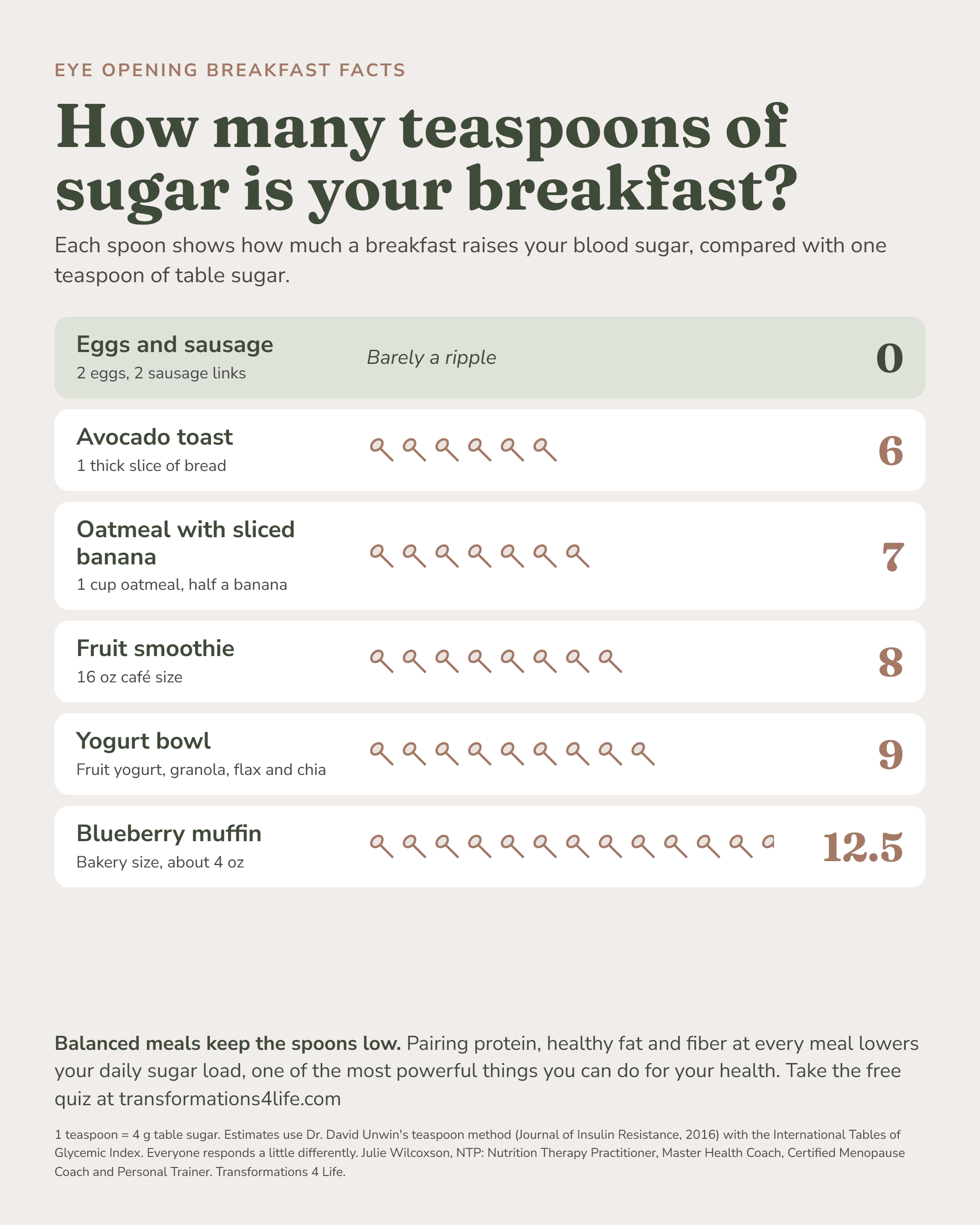
Notice where eggs and sausage land: barely a ripple. A breakfast built around protein and healthy fat keeps your energy steady all morning, while a bakery muffin equals about 12 teaspoons of sugar.
Lunch
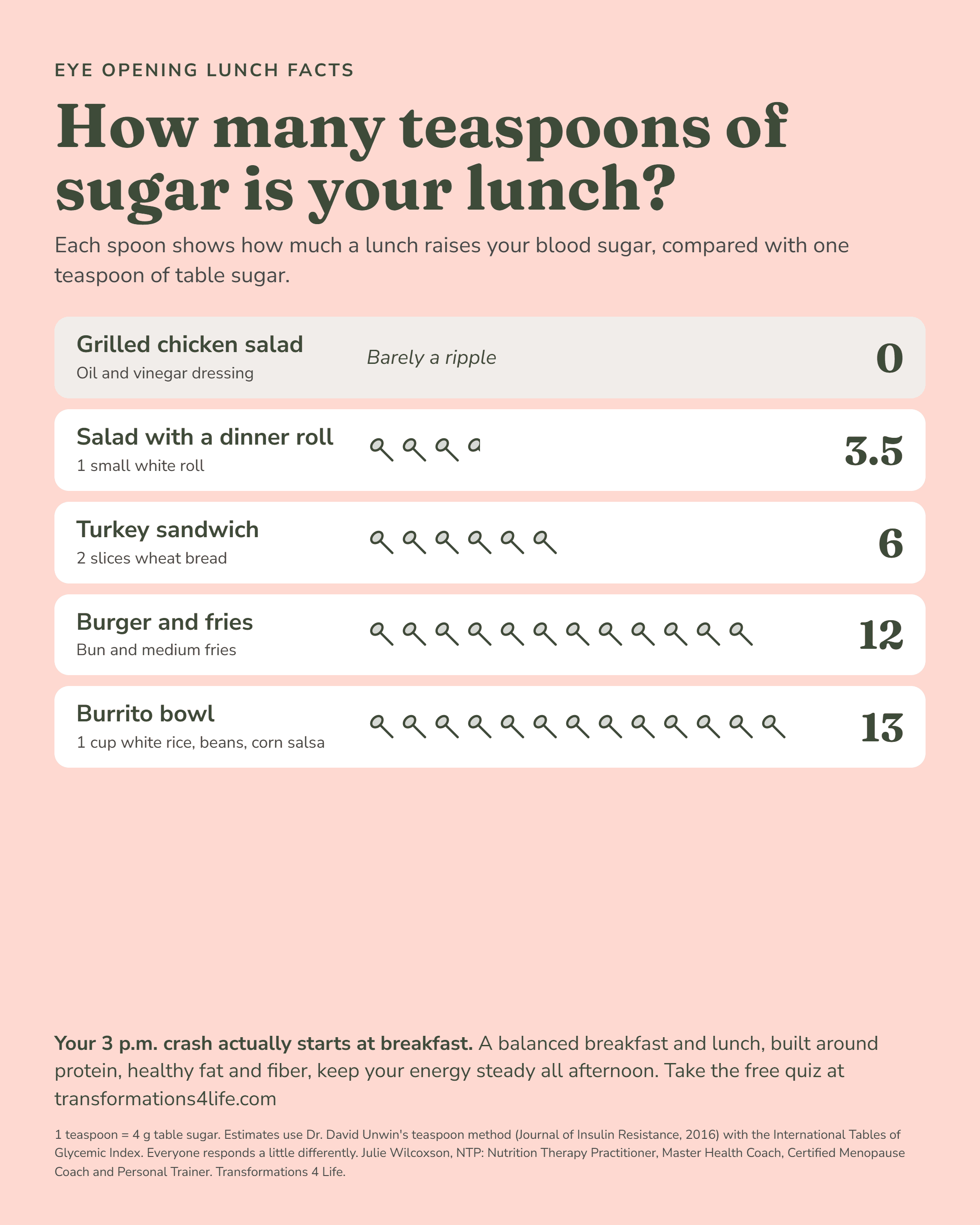
Your 3 p.m. crash actually starts at breakfast and builds at lunch. A burrito bowl with white rice comes in around 13 teaspoons, and a grilled chicken salad comes in close to zero.
Dinner
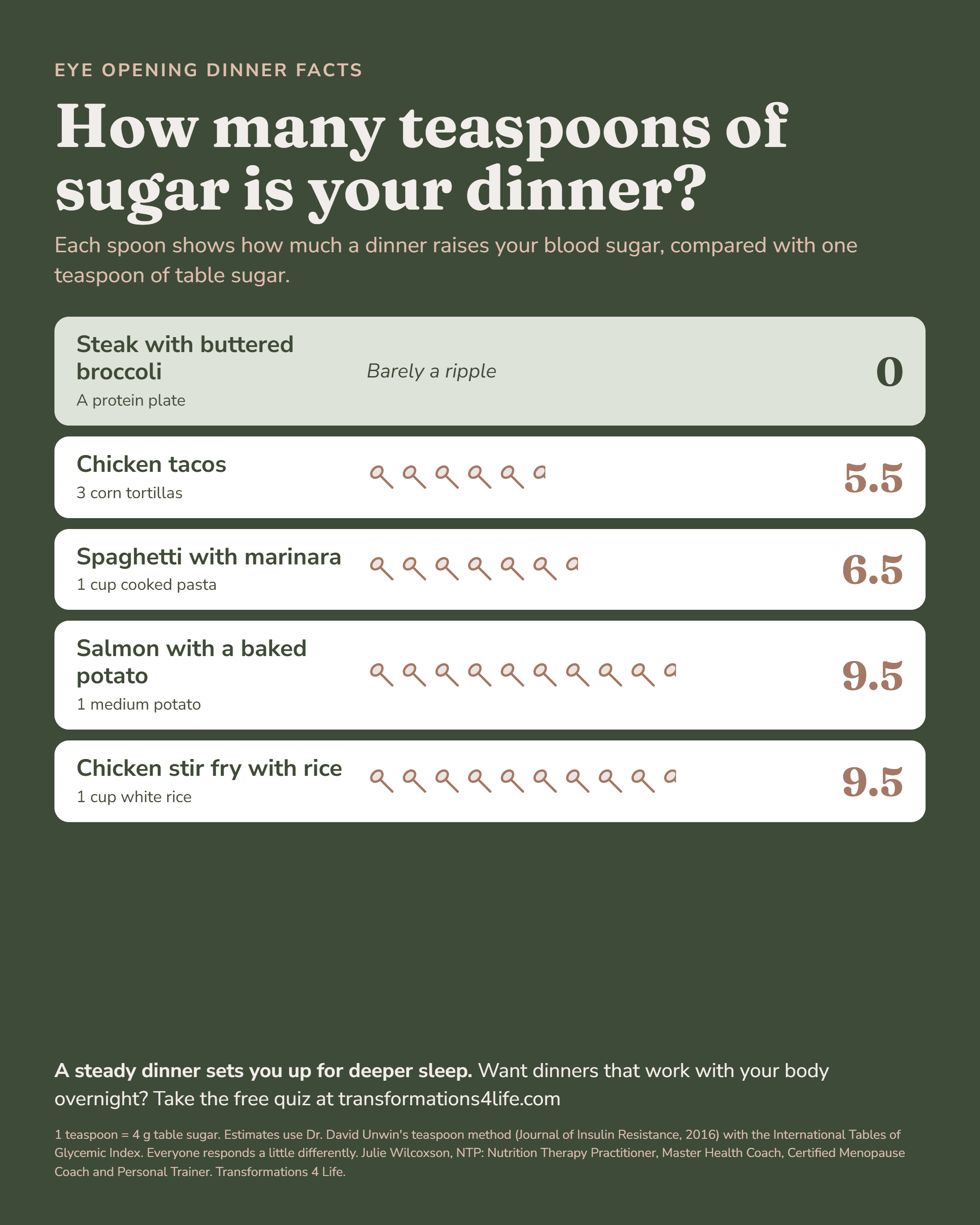
A steady dinner sets you up for deeper sleep. Steak with buttered broccoli barely moves your blood sugar, while a stir fry over a cup of white rice comes in around 9.5 teaspoons.
Snacks and sides
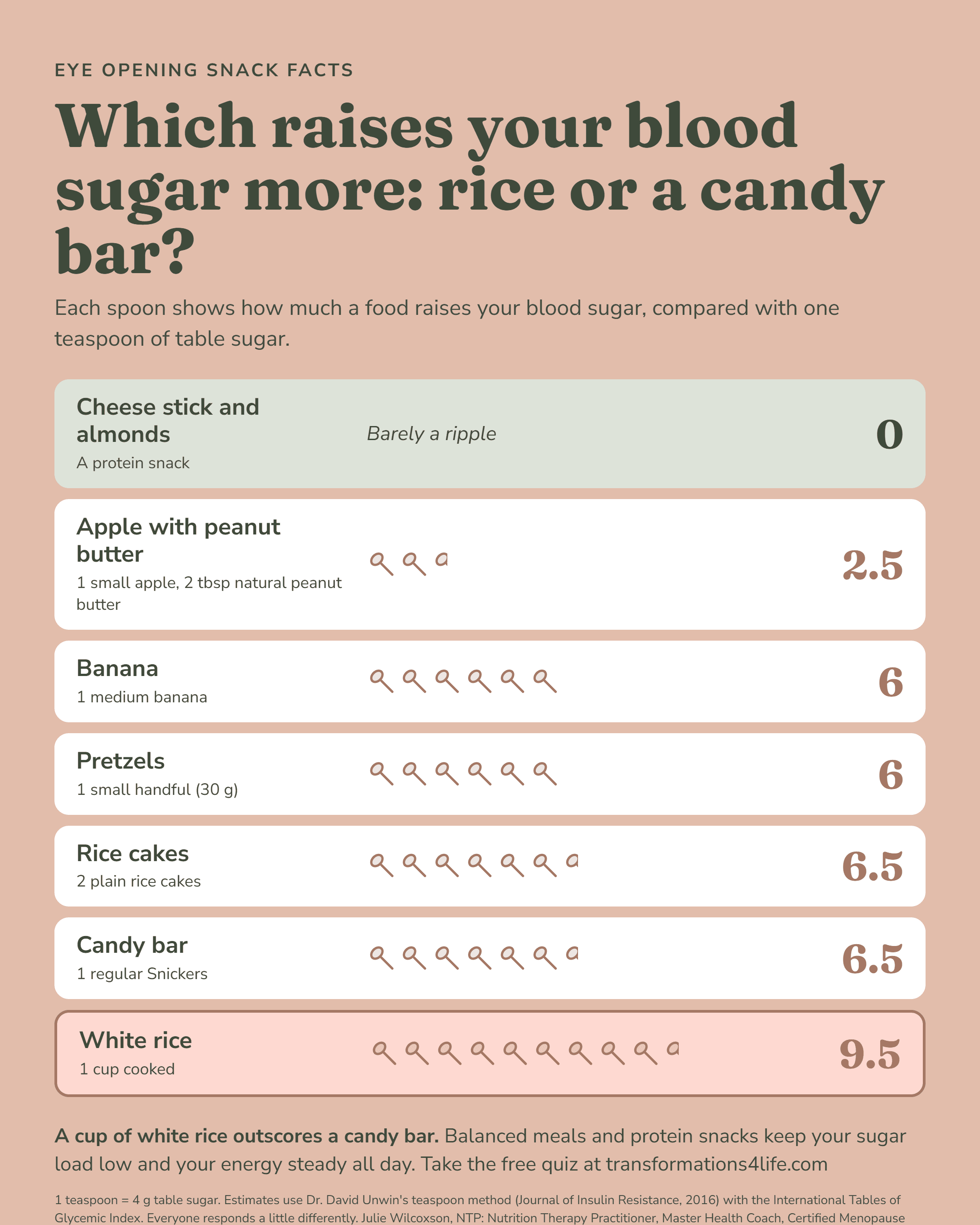
Here’s the one that surprises everyone: a cup of white rice raises your blood sugar more than a candy bar. That doesn’t make the candy bar a health food! It shows how much the starches on our plates add up. Pair your carbs with protein, keep portions small, and reach for snacks like apple slices with natural peanut butter.
Your next step
Balanced meals with protein, healthy fat and fiber keep the spoons low, and lowering your daily sugar load is one of the most powerful things you can do for your health. Food is one piece of the picture. Sleep, stress, movement and light all shape your blood sugar too.
All numbers are estimates, rounded to the nearest half teaspoon. 1 teaspoon equals 4 grams of table sugar. These estimates use Dr. David Unwin’s teaspoon of sugar method (Unwin, Haslam and Livesey, Journal of Insulin Resistance, 2016) with the International Tables of Glycemic Index and Glycemic Load. Everyone responds a little differently, and this page is for education, not medical advice.
Julie Wilcoxson, NTP: Nutrition Therapy Practitioner, Master Health Coach, Certified Menopause Coach and Personal Trainer.