
Weight Loss vs Fat Loss And Why the Difference Matters for Women Over 40
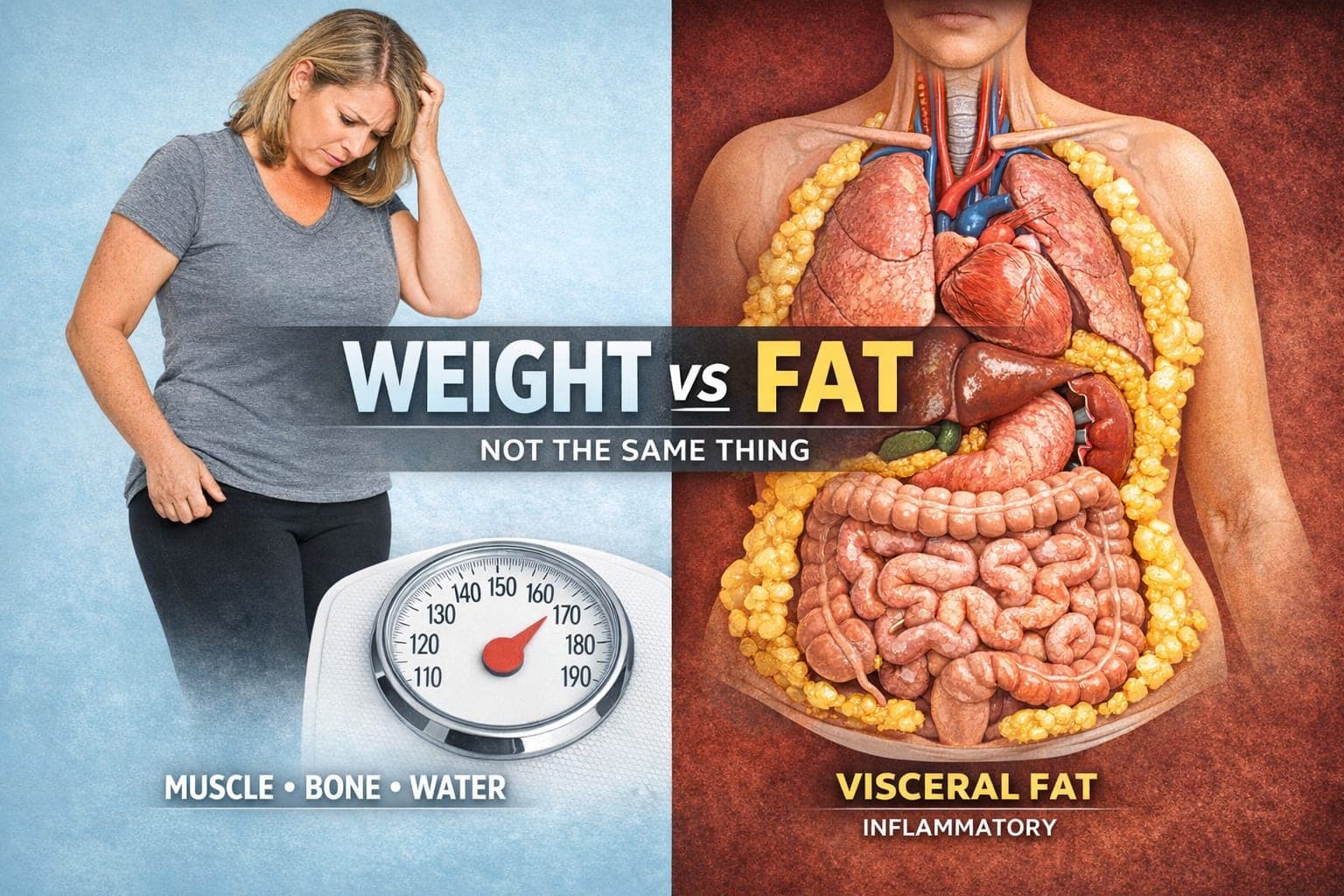
I hear it all the time, “I just want to lose weight.” From women in their 30s, 40s, and 50s and beyond. From high performers, exhausted moms, business owners, and everyone in between.
But here’s the truth:
You don’t want to lose weight.
You want to lose FAT, specifically visceral fat.
Because weight and fat are not the same thing.
- Muscle
- Bones
- Organs
- Water
- Body Fat
When the scale drops, it does not tell you what you lost. If you lose muscle, your metabolism slows.
If you lose water, it comes back. None of these equals metabolic improvement. This is why focusing only on weight loss often backfires for women over 40.
Is it subcutaneous fat (under the skin) or
Visceral fat (deep fat around the organs)
Subcutaneous fat plays a protective role in hormone production and metabolic cushioning. However, visceral fat is different. It wraps around your:
- Liver
- Heart
- Pancreas
- Intestines
- Kidneys
And behaves like an inflammatory organ, which is putting your health at risk.
- Insulin resistance
- Elevated fasting insulin
- Chronic inflammation
- Cardiovascular disease
- Cognitive decline
- Hormonal dysregulation
It disrupts blood flow, crowds abdominal organs, and increases inflammatory signaling. You can be “normal weight” and still carry dangerous levels of visceral fat. This is called metabolically unhealthy normal weight, and it’s more common than people realize.
Glucagon, insulin’s counter hormone, is responsible for releasing stored energy. If insulin remains dominant, fat burning never gets a chance to occur.
This is why simply restricting calories rarely works long-term. You must address insulin dynamics.
- Visceral fat reduction
- Muscle gain
- Improved insulin sensitivity
- Reduced inflammation
- Improved mitochondrial health
You can:
- Lose body fat
- Gain lean muscle
- Improve blood work
- Feel stronger and more energized
And yet, the scale barely moves. This is why women often quit, because they are measuring the wrong metric.
- Lowering Chronic Insulin Spikes
- Prioritizing Adequate Protein
- Building Muscle
- Supporting Gut Health
- Improving Sleep and Circadian Rhythm
- Stress Management
Weight loss can make you smaller. Fat loss, especially visceral fat loss, makes you healthier.
When we stop chasing the sale and start improving metabolic health:
- Energy improves
- Hormones stabilize
- Inflammation decreases
- Strength increases
- Confidence rises
When function improves, the body changes in beautiful ways that are sustainable.
- Fermentation: The Missing Link Between Food and Feeling Good
- Metabolic Health: 93% Of Adults Are Unhealthy (And Don’t Even Know it)
- Iodine Deficiency: The Overlooked Nutrient Affecting Hormones, Thyroid, and Long-Term Health
- This Fat is the Root Cause of Chronic Disease (Doctors aren’t Measuring It) Dr Sean O’Mara