Three Conversations I Can’t Stop Thinking About
Over the last ten days, I’ve had three completely separate conversations about osteoporosis.
Three different women with three different stories.
Yet every conversation ended almost exactly the same way.
I wish someone had told me sooner.
One had recently been diagnosed.
Another was caring for someone who had broken a hip after what seemed like a simple fall.
The third looked at me with genuine surprise when I explained that bone loss doesn’t suddenly begin when you retire, it starts much earlier.
None of these women were ignoring their health and none of them were careless.
They simply assumed that if something this important was happening inside their body, someone would tell them before it became a problem.
Instead, the warning came after the diagnosis and that bothered me.
Because osteoporosis isn’t something that develops overnight.
It’s a conversation your body has been trying to have with you for years.
The encouraging news? Your bones are constantly listening to the choices you make today.
Bone Isn’t Concrete. It’s Alive.
When most people think about bones, they imagine something solid and permanent, almost like concrete.
But your skeleton is anything but lifeless, it is actually living tissue.
Right now, as you’re reading this, your body is breaking down tiny areas of old bone while simultaneously building new bone. This process, called bone remodeling, happens throughout your entire life.
Your skeleton is constantly asking one simple question:
What kind of life do I need to prepare for?
Do you lift heavy things, walk, climb stairs, use your muscles regularly, spend time outdoors?
Are you eating enough protein to rebuild what your body is constantly replacing?
Every one of those daily habits sends information to your skeleton, your bones don’t just get older. They are adapting to your lifestyle and it’s inputs.
Bone Loss Starts Earlier Than Most Women Realize
One of the biggest misconceptions I hear is that osteoporosis is something women need to think about in their 60s or 70s.
However, that reality is much different.
Most women reach their peak bone mass by around age 30.
From that point forward, the goal shifts from building bone to preserving it.
Then menopause accelerates the process because estrogen plays a major role in maintaining healthy bone remodeling.
This is why I encourage every woman over 35 to start thinking differently about bone health, because this is when you have time to strengthen, build muscle, improve balance, and create habits that will continue paying you back decades from now.
We spend years saving for retirement, why wouldn’t we invest in the body we’ll be living in when we get there?
Strong Bones Are Built Through Movement
One of the most fascinating things about bone is that it responds to challenge.
Your skeleton doesn’t become stronger by sitting still, it becomes stronger when it has a reason to.
Every time your muscles contract against bone, they create mechanical tension that tells your body:
This bone is needed. Keep it strong.
That’s why strength training is one of the most powerful things you can do for your skeleton.
And before your mind jumps to heavy barbells or bodybuilding, let me reassure you.
Strength training might mean:
The goal is staying strong enough to enjoy your life and every repetition is an investment in your future independence.
Sitting Is Quietly Changing Our Bones
Modern life has changed how we move and for many of us, we spend hours sitting at a desk, driving, watching television, or scrolling our phones.
Our ancestors rarely experienced prolonged periods without movement.
Their bodies walked, lifted, carried, squatted, climbed, and moved throughout the day.
Our skeleton evolved expecting those patterns. Instead, many bones spend hours receiving very little mechanical loading.
Muscles become weaker, balance declines, reaction time slows, so your bones receive fewer reminders that it needs to remain dense and resilient.
Movement isn’t simply exercise, it’s communication. With every walk around the block, every flight of stairs, and every time you choose to stand instead of sit your skeleton is paying attention.
Your Body Is More Electric Than You Think
Here’s something that still amazes me every time I teach it. Bone isn’t only structural, it’s electrical.
When healthy bone bends ever so slightly during walking, hiking, resistance training, or climbing stairs, it generates tiny electrical charges.
Scientists call this the piezoelectric effect.
Those microscopic electrical signals activate the cells responsible for building stronger bone.
Think about that for a moment.
Every step you take isn’t simply moving your body forward, but it’s creating information inside your skeleton.
Your body truly is electric. And movement is one of the ways that electricity comes alive.
Sunshine Belongs in the Bone Conversation
Whenever osteoporosis comes up, the conversation usually turns to calcium supplements or vitamin D pills.
Both have their place. But I think we’re missing a much bigger picture.
Your body was designed to interact with the sun every single day.
Morning sunlight helps regulate circadian rhythms, influences hormone production, supports sleep quality, and allows your skin to naturally produce vitamin D.
Those systems don’t work independently, they’re connected.
Healthy sleep supports recovery. Hormones influence bone remodeling.
Energy production affects every tissue in the body. Bone health isn’t built from one nutrient. It’s built from a lifestyle that gives your body the information it was designed to receive.
That’s one of the reasons I encourage my clients to start their mornings outdoors whenever possible. Sometimes the simplest habits have the greatest long-term return.
Protein Matters More Than Most Women Realize
One of the biggest nutrition mistakes I see is women eating far too little protein.
Protein doesn’t only help build muscle. It provides the amino acids needed to maintain connective tissue and supports the framework upon which minerals are deposited to create strong bone.
Muscle and bone work together. As muscle weakens, bone often follows.
his is why I rarely talk about osteoporosis without also talking about preserving muscle, because they’re partners.
You don’t build one while ignoring the other.
Did the Fall Cause the Fracture?
We often hear someone say,
She fell and broke her hip.
But researchers are learning that the story isn’t always that simple.
In many cases, fragile bone fractures during a movement that healthy bone would tolerate. The fracture itself contributes to the fall and that changes the conversation entirely.
Instead of asking, How do we prevent falls?
Maybe we should also ask, How do we build stronger bodies before the fall ever happens?
Balance, reaction time, muscle, and bone are all important. They all work together.
The Goal Isn’t Better Bone Density
When I think about osteoporosis, I don’t picture a bone scan. I picture a woman hiking with her grandchildren.
Traveling without hesitation. Working in her garden. Carrying groceries into the house. Getting down on the floor and standing back up without needing help.
That’s what we’re really protecting.
Our independence, confidence, ability to continue living independently. Strong bones help us live better through our golden years.
Four Things You Can Start This Week
You don’t have to overhaul your entire life. Small, consistent actions matter.
This week, start here:
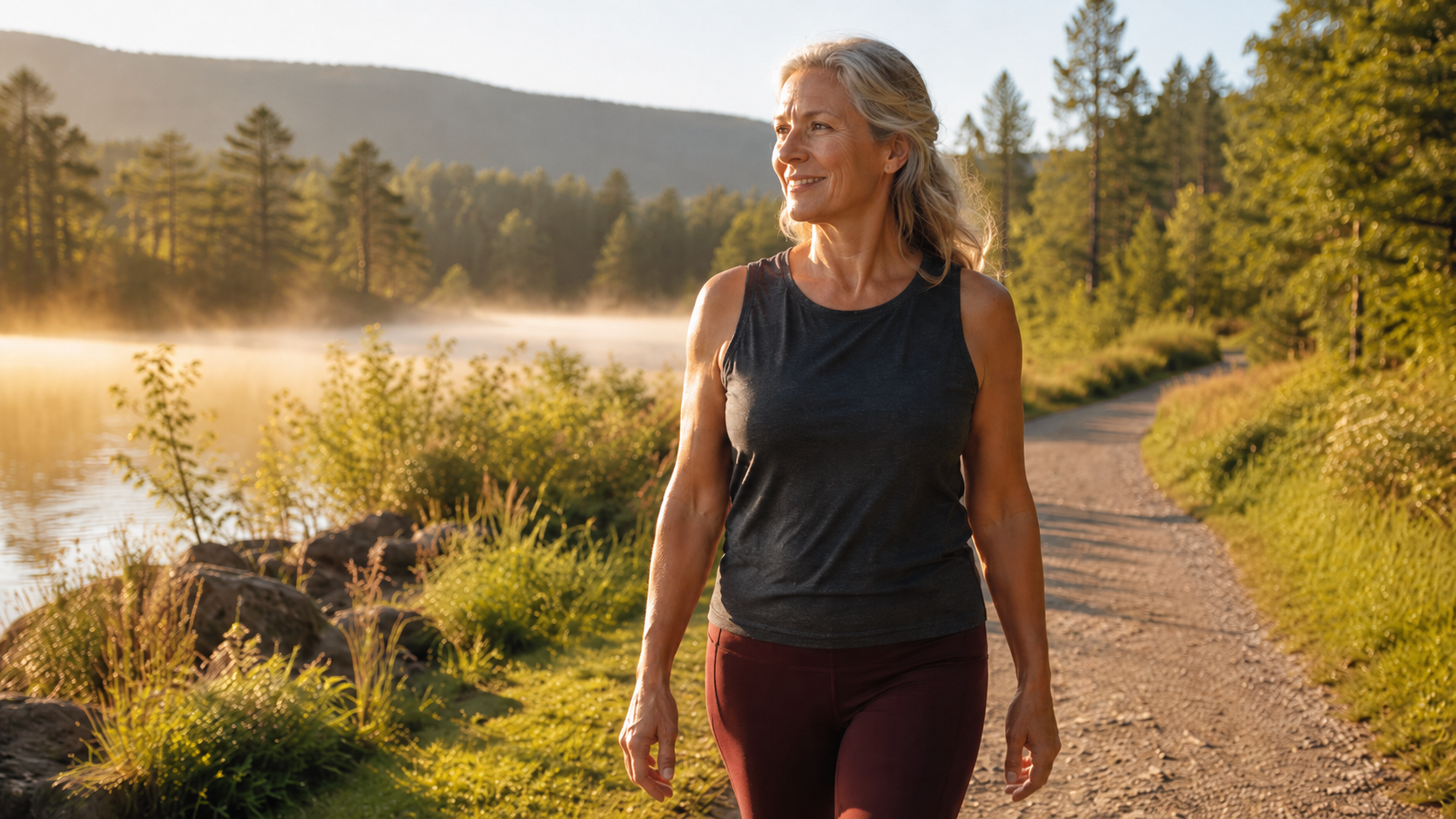
Spend time outside each morning. Give your body natural light, fresh air, and a chance to align with the day.
Strength train two or three times each week. Your muscles and bones both benefit from resistance.
Walk every day. A brisk walk, especially outdoors, supports your bones, muscles, balance, metabolism, and overall health.
Prioritize protein at every meal. Your body can’t rebuild what it doesn’t have the raw materials to create.
None of these habits are flashy and none of them promise overnight results. But over the course of years? They become incredibly powerful.
A Different Way to Think About Aging
I don’t believe aging automatically means becoming fragile. I believe our bodies continue responding to the information we give them every single day.
Every sunrise, walk, meal, lift, night of quality sleep. All those small decisions add up to help build a stronger and more resilient life.
My hope is that more women begin having this conversation while there’s still plenty of time to influence the outcome.
Continue the Conversation
If this article resonated with you, I’d love to have you join my weekly newsletter, where we explore the everyday habits that help women build strength, protect their health, and age with confidence. Each Friday, you’ll receive practical strategies, simple science, and encouragement you can apply right away one step at a time.
Further Reading
National Institute of Aging: Osteoporosis overview
Bone Health & Osteoporosis Foundation: Women and Osteoporosis
The Impact of Resistance Training on Bone Mineral Density in Aging Adults
Comments are closed