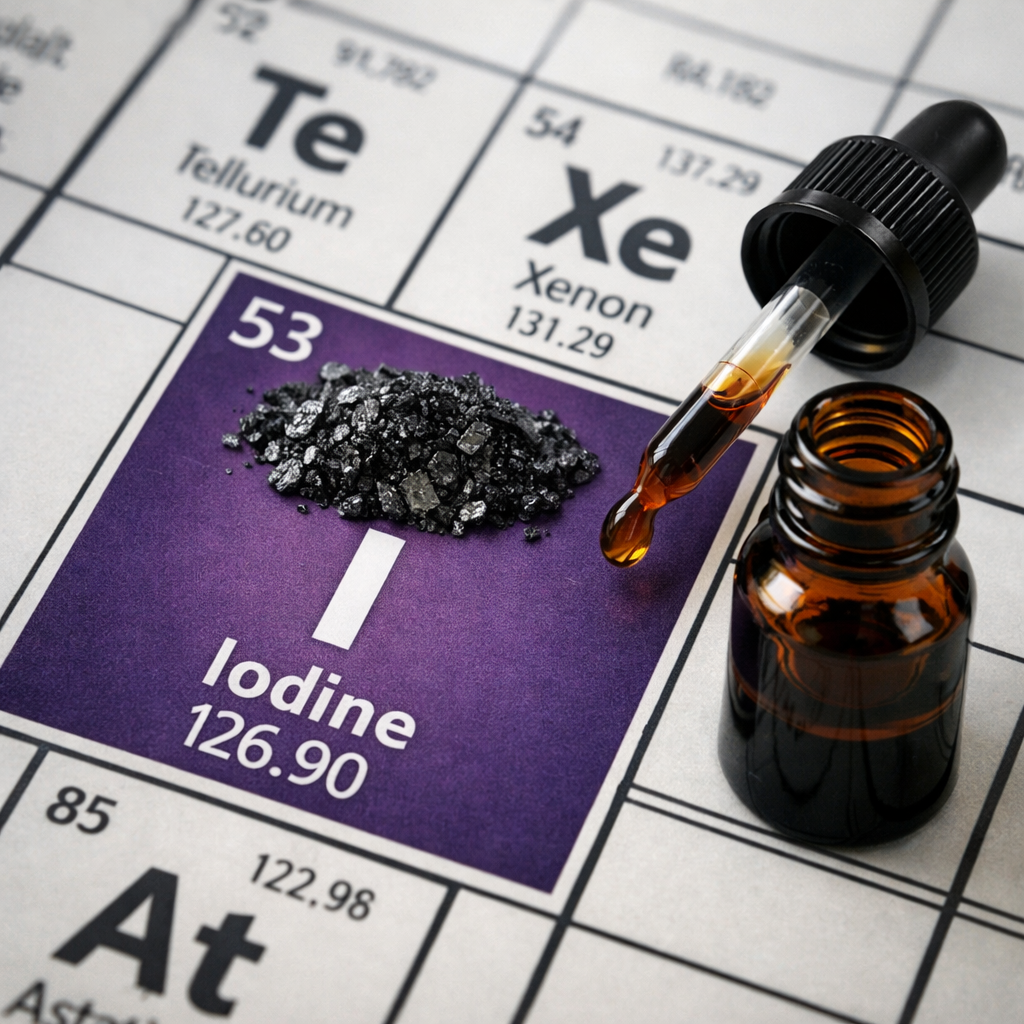
Most people have heard of iodine only in relation to the thyroid. If you’ve thought about it at all, it was probably in the context of iodized salt or goiter prevention. However, the connection between iodine and overall health—often referred to as iodine health—is much broader than many realize.
But iodine is far more than a “thyroid nutrient.”
After listening to a powerful podcast conversation between Dr. Ken Berry and Dr. David Brownstein, it became clear just how misunderstood and underestimated iodine really is.
You’re Iodine Deficient with Dr. David Brownstein
Globally, roughly 4 out of 10 people are iodine-deficient by official standards. By optimal health standards, that number is likely much higher.
And most people, including many clinicians, have no idea.
Iodine is Not Just for the Thyroid
One of the most important points discussed is this:
Every human cell tested has a transport system that brings iodine into the cell.
That means iodine matters for:
- Prostate
- Pancreas
- Brain and nervous system
- Skin and immune tissue
- Thyroid function
- Breast tissue
- Ovaries adn uterus
Iodine is an essential element, which means the body cannot make it. If it’s not in your food or environment, your cells simply go without.
This alone should change how we think about iodine.
What Happens When Iodine is Low
Iodine deficiency doesn’t usually show up overnight. It follows a predictable pattern, especially in glandular tissue.
When iodine remains low for long periods of time, tissues may progress through stages such as:
- Cyst formation
- Nodules
- Tissue overgrowth (hyperplasia)
- Increased cancer risk at the far end of the spectrum
This pattern has been demonstrated in animal studies, tissue studies, and human research. It helps explain why conditions like fibrocystic breast changes, thyroid nodules, and other glandular issues are so common today.
The Modern Problem: Less Iodine, More “Iodine Imposters”
Over the last 50 years, iodine intake has dropped significantly. At the same time, exposure to iodine “look-alike” chemicals has increased.
These chemicals are often called halides in scientific literature. In simpler terms, they are chemical cousins of iodine that can compete with it in the body.
The most relevant ones today are:
- Bromide
- Fluoride
These substances use the same cellular doorway iodine uses. When iodine is low, these impostors can take its place.
This matters because:
- Bromide and fluoride have no beneficial role in human biology
- They can disrupt enzymes, hormones, and cellular signaling
- They tend to accumulate in glandular tissues when iodine is missing.
In clinical testing discussed by Dr. Brownstein, iodine supplementation often led to increased excretion of bormide, suggesting iodine helps push these impostors back out.
Why the RDA for Iodine Misses the Mark
The current Recommended Dietary Allowance (RDA) for iodine was established over 100 years ago with one goal: preventing goiter.
It was never designed to:
- Optimize whole-body iodine levels
- Account for modern chemical exposures
- Support breast, reproductive, or neurological health
This is why people can meet the RDA and still be functionally deficient.
Testing Iodine: Why Most Methods Fall Short
A common DIY method you may have seen involves painting iodine on the skin and watching how fast it fades. Unfortunately, research has shown this is unreliable because much of the iodine simply evaporates rather than being absorbed.
More functional approaches discussed in the podcast involve urinary iodine testing protocols that assess how much iodine the body retains versus excretes. These methods provide a clearer picture of whole-body iodine status.
Iodine and Pregnancy: A Non-Negotiable Nutrient
One of the most important takeaways from the discussion is the role iodine plays in fetal and infant brain development.
Iodine deficiency during pregnancy has been associated with:
- Reduced cognitive development
- Permanent IQ loss in children
- Developmental delays
This is not a historical issue. It is still happening today, even in developed countries.
It is mentioned that adequate iodine before conception, during pregnancy, and while breastfeeding is critical.
Why This Conversation Matters
Modern medicine excels at diagnosing disease. It struggles with prevention.
Iodine deficiency may not be the only factor driving today’s rise in thyroid disorders, breast conditions, and hormone-related cancers, but it appears to be a significant and overlooked piece of the puzzle.
As discussed by Dr. Berry and Dr. Brownstein, iodine is not a fringe supplement or outdated nutrient. It is fundamental to how the human body was designed to function.
Ignoring it comes at a cost.
Final Thoughts
If you’re dealing with hormone issues, thyroid symptoms, fibrocystic changes, or are planning for pregnancy, iodine deserves thoughtful consideration.
This is a topic where asking better questions can change outcomes.
Credit
This article is inspired by and summarizes key concepts discussed in a podcast conversation featuring Dr. Ken Berry and Dr. David Brownsitein, with a focus on iodine’s role in human health.
Disclaimer
I am not a doctor, and this article is not meant to recommend or prescribe any supplement; however, it is meant to bring awareness to you to do your own research and consult with your trusted health practitioner.
Comments are closed